
What to Know Before You Accept an Offer for Your Gold or Silver
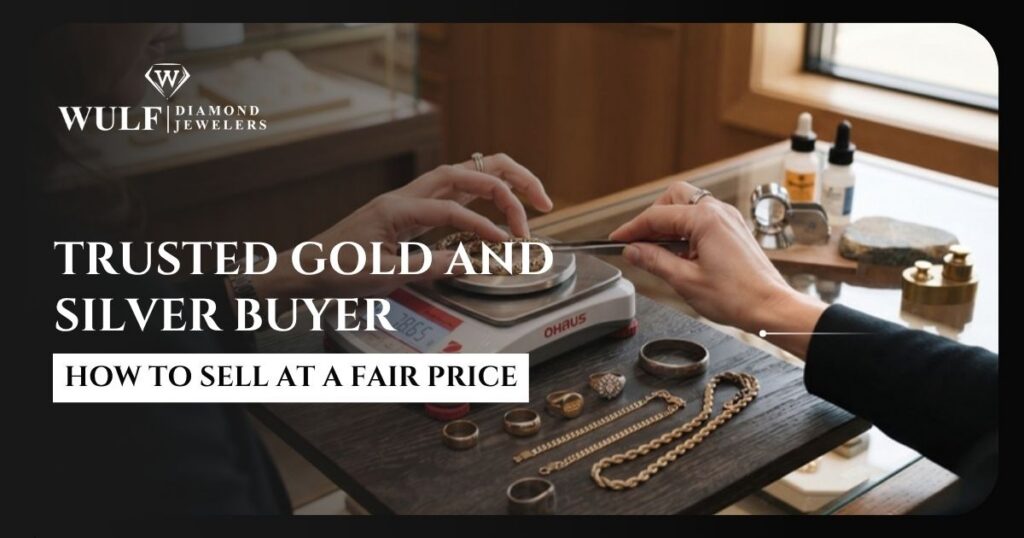
A trusted gold and silver buyer can make a real difference in what you walk away with, because the same ring can draw very different offers depending on who weighs it and how the number is reached. Two shops looking at one chain may quote prices that are far apart, and the seller often has no way to tell which one is fair.
Maybe you inherited a jewelry box, found a broken chain in a drawer, or want to sell gold and silver you no longer wear. This guide explains how gold and silver are valued, what happens during testing, what you can bring, and how to recognize a buyer worth dealing with. Where it helps, we also describe how things work at our Crown Point showroom.
Why a Trusted Gold and Silver Buyer Matters
Most buyers pay a percentage of the metal’s melt value, which is what the gold or silver in your piece is worth at the current market price. That percentage is not fixed. It changes from one business to the next, and it is the number that decides whether an offer is fair. A trusted gold and silver buyer will tell you what they identified, what your piece weighs, and how they arrived at the figure.
Before you accept anything, ask five questions:
• What purity did you find, and how did you test it?
• What does the piece weigh, excluding stones?
• Which market price are you using today?
• What percentage of that value are you offering?
• Does the piece have value beyond its metal?
A buyer who answers all five without hesitation is easier to deal with. If someone dodges any of them, that tells you something.
How a Gold and Silver Appraisal Works
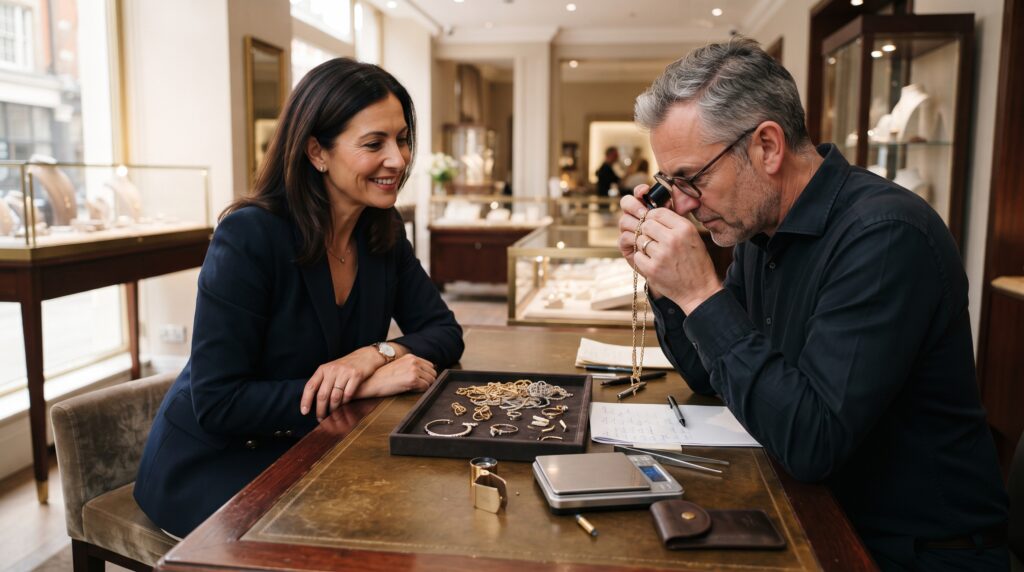
A gold and silver appraisal follows a fairly standard order, though the details change from item to item.
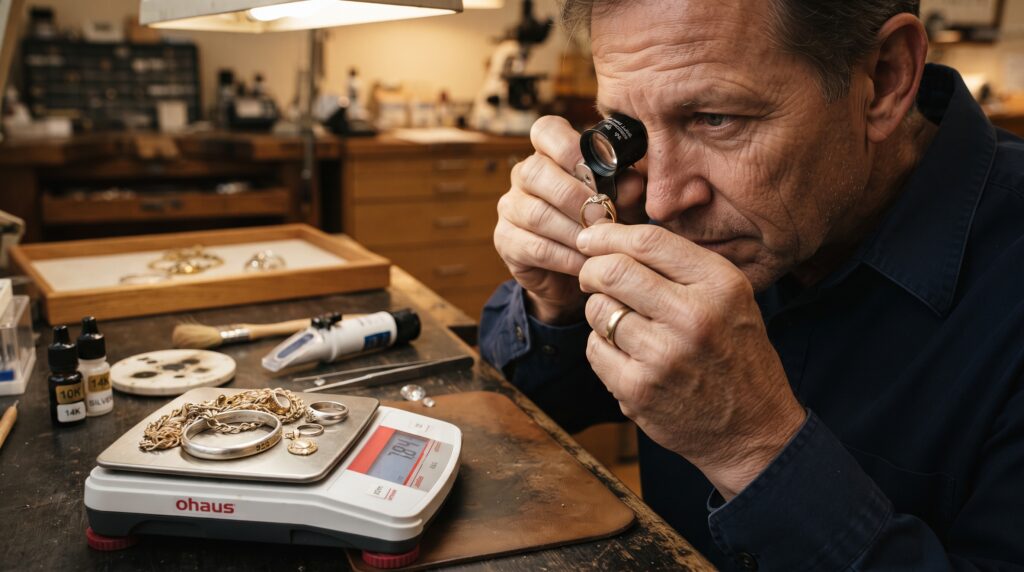
1. Inspection: the evaluator looks over the piece for damage, repairs, stones, and solder points.
2. Marks: stamps such as 14K, 585, or 925 are read under a loupe.
3. Testing: acid testing and X-ray fluorescence (XRF) analysis are common methods. A stamp can be wrong, so testing confirms what the metal actually is.
4. Weighing: the metal is weighed in grams or pennyweights, with stones and non-metal parts accounted for.
5. Pricing: weight and purity are combined with the current market price.
6. Explanation: the buyer tells you how the offer was built.
One distinction clears up a lot of confusion. An appraisal written for insurance states replacement value, which is usually higher than what a buyer will pay for the same piece. If you want to know what something would sell for, ask for a purchase quote. If you want coverage on a ring you are keeping, book a jewelry appraisal instead.
Karat, Purity, and Why Similar Rings Get Different Offers
Karat tells you how much of an alloy is pure gold. 24K is nearly pure, 18K is 75 percent gold, 14K is about 58 percent, and 10K is about 42 percent. The rest is other metals that make the piece harder and change its color. A 14K ring and a 10K ring of the same weight and appearance hold different amounts of gold, which is why their offers differ.
Silver and platinum use their own marks. Sterling silver is stamped 925 because it is 92.5 percent silver. Platinum jewelry is often stamped 950, PT, or Plat, which points to about 95 percent platinum. Pieces marked GF, GP, or HGE are gold-filled or plated, meaning a thin layer of gold over another metal, and they carry far less scrap value than solid gold.
Weight, Market Price, and the Math Behind an Offer
Precious metals are weighed in grams, pennyweights, or troy ounces. One troy ounce is about 31.1 grams, and a pennyweight is about 1.55 grams. The spot price, which is the market price per troy ounce, moves through the day, so an offer made this week can differ from one made last month.
You can estimate melt value yourself. Multiply the weight in grams by the purity to get the pure gold weight, so a 5 gram 14K chain holds about 2.9 grams of pure gold. Divide by 31.1 to convert to troy ounces, then multiply by the spot price. That gives you melt value before the buyer’s percentage is applied. Look up the spot price on the day you visit so you know what your numbers should look like.
Stones are not part of the metal weight. Broken clasps, bent rings, and single earrings still count for their metal, which is why a scratched ring nobody would wear can still have real value.
Condition, Craftsmanship, and Value Beyond Metal
Not every piece should be priced by melt value alone. Signed designer jewelry, estate pieces from a particular era, and pieces with well-cut gemstones can be worth more than their metal, so a trusted gold and silver buyer should look at more than weight, and you should ask whether they did.
Coins are a separate case. A coin’s collector value can far exceed its metal content, and cleaning or polishing an old coin can lower it. Leave coins as you found them until someone qualified has examined them.
What You Can Sell to a Precious Metal Buyer
A precious metal buyer looks at more than gold rings. Sort what you have into groups before you visit, since each group is priced a little differently.
Gold Jewelry, Scrap, and Broken Pieces
Rings, chains, bracelets, earrings, and old settings all carry metal value. So do the pieces most people write off, such as tangled chains, earrings that lost their match, and bands bent out of shape. If a piece is broken, ask a jeweler whether it is worth repairing before you sell it as scrap. Our jewelry repair team can tell you which makes more sense.
Sterling Silver Jewelry and Silverware
Look for 925 or Sterling stamps on jewelry, flatware, and serving pieces. Silver is worth far less per ounce than gold, so weight matters more, and a full set of flatware can add up. Silver-plated items are not sterling and usually carry little value. Our sterling silver page has more detail.
Coins and Bullion
Bars, rounds, and coins are valued on purity, weight, mint, and condition. Some sell close to their metal value, while older or rarer coins may carry a premium. See our coins and currency page for more.
Estate and Inherited Pieces
Inherited collections often mix solid gold, plated costume pieces, and stones. Sort them, photograph them, and bring them together so the evaluator can separate what has value from what does not. If a piece holds a larger diamond, ask about that stone separately, since it may be worth more than the metal around it. We also buy fine jewelry and diamonds.
Cash for Gold and Silver: How to Prepare Before You Visit
Getting cash for gold and silver goes more smoothly when you arrive prepared, and a few habits protect you when you compare quotes from any trusted gold and silver buyer.
• Sort items by type: gold, silver, platinum, coins, and everything else.
• Leave everything uncleaned, especially coins and antique silver.
• Photograph the pieces and write down any marks you can read.
• Check the day’s spot price so you know the range to expect.
• Bring receipts, old appraisals, or paperwork for signed pieces.
• Bring a valid photo ID, because buyers are generally required to verify who is selling.
• Visit more than one buyer and compare written quotes before you decide.
If you plan to sell gold and silver together, keep the two groups separate. They are priced differently, and separate piles make it easier to see how each offer was built.
How to Identify a Certified Gold Buyer
The phrase certified gold buyer sounds official, but no single license or credential defines it, so the phrase alone proves little. Ask what the certification is, who issued it, and what it covers. Wulf Diamond Jewelers has GIA-certified professionals on staff, whose training centers on gems and diamond grading, and our team is glad to explain how a piece is tested and weighed.
Beyond credentials, a trusted gold and silver buyer shows it has nothing to hide:
• A physical address you can visit, with posted hours.
• Reviews from real customers on more than one site.
• Staff who explain testing and pricing in plain language.
• A written quote you can take with you.
• No pressure to decide on the spot.
Be wary of anyone who promises top dollar before seeing the item, quotes a price without weighing it, or pushes you to accept before you have had time to think. If you are mailing items to a buyer, get the terms for returning them in writing first.
Selling Inherited Jewelry Without Rushing
Inherited pieces carry more than metal value. Some belonged to a parent or grandparent, and it is fine to keep the ones that matter and sell the rest. Have everything looked at before you decide, because a plain piece can be solid gold and a showy one can be plated.
If you would rather keep the sentiment than sell, our custom jewelry team may be able to rework old gold into a new piece. Take your time. A trusted gold and silver buyer will not rush you through an estate.
Sell to a Trusted Gold and Silver Buyer in Crown Point
Wulf Diamond Jewelers has bought and sold jewelry in Northwest Indiana for nearly 50 years, and our team of local jewelers is built around honest answers. Bring your items to 10460 Broadway in Crown Point, Monday through Friday from 10:00 AM to 6:00 PM or Saturday from 10:00 AM to 5:00 PM. We are closed on Sundays. Call (219) 247-7082 if you want to know what to bring first.
Visit our gold, silver, and platinum page to see what we buy, or contact us to plan a visit. Whatever any buyer tells you, you can say no and leave with your jewelry.
Trusted Gold and Silver Buyer: FAQs
How Do I Find a Trusted Gold and Silver Buyer?
Look for a business with a physical location, verifiable reviews, and staff who explain how they test, weigh, and price your items. A trusted gold and silver buyer gives you a written quote and lets you decide without pressure.
How Is Gold and Silver Value Determined?
Value comes from purity, weight, and the current market price, and then the buyer’s percentage is applied. Condition, brand, age, and collector interest can add value beyond the metal.
Can I Sell Broken or Damaged Gold and Silver Jewelry?
Yes. Buyers value broken chains, bent rings, and single earrings by their metal content, so damage does not erase their worth. Ask a jeweler whether repair makes more sense first.
What Types of Gold and Silver Can I Sell?
Jewelry, scrap, sterling silver, coins, bullion, and inherited pieces are common. Eligibility depends on the item, so ask what a buyer accepts before you visit.
Should I Get My Gold Appraised Before Selling?
It helps if you are unsure what you own, since a gold and silver appraisal identifies purity and weight. Keep in mind that an insurance appraisal states replacement value, which differs from what a buyer offers.
What Should I Bring When Selling Gold and Silver?
Bring the items unwashed, any receipts or old appraisals, and a valid photo ID. Requirements vary by buyer and local law.